


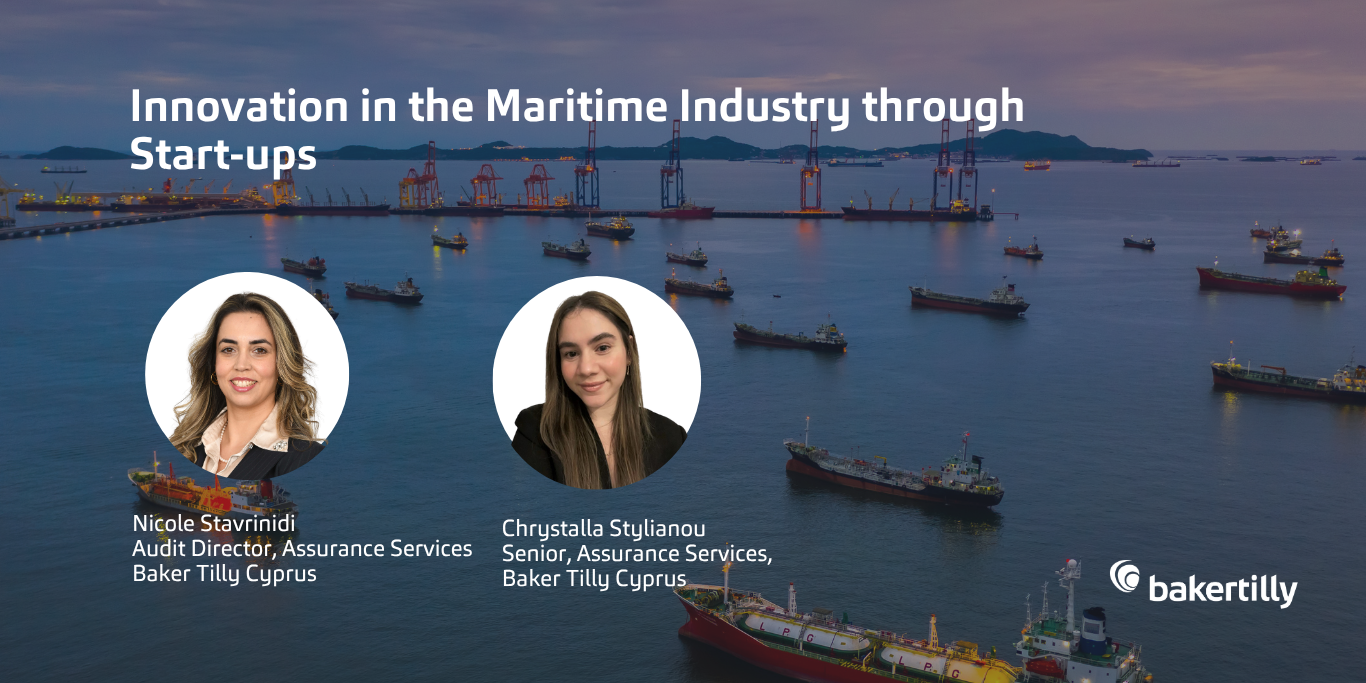
Incorporating a so-called start-up entity does not necessarily mean that the company operates within the technology sector. Start-ups today are increasingly established as vehicles to promote innovative ideas capable of influencing a wide range of industries and sectors.
The shipping industry, one of the most traditional and established industries globally, is progressively embracing innovation through entrepreneurial initiatives and new business models aimed at improving efficiency, sustainability and operational effectiveness.
Cyprus, and in particular Limassol, continues to attract such entrepreneurs, given that shipping remains one of the city’s strongest economic sectors. At the same time, the local expertise, technological advancements and the availability of specialised service providers supporting the fiduciary and corporate aspects of such ventures create an ecosystem capable of supporting the new entities established to accommodate these innovative ideas.
During the latest years and given the regional as well as worldwide geopolitical uncertainties that exist and vary across different regions, the maritime industry is facing increasing pressure, including within supply chain challenges, pricing considerations, delays in delivery and other related disruptions. This, of course, results in the necessity to think of innovative ideas and move away from the traditional ways of trading that have been followed over the years. This is exactly where start-ups make their impact.
This impact is already evident. Based on our research, several key innovations are being implemented by entrepreneurs worldwide, directly influencing day-to-day shipping operations and reshaping core processes within the industry.
Smart operations
Operators are increasingly using artificial intelligence and predictive models to improve fuel efficiency and determine optimal routing. This not only helps reduce operational costs but also improves speed, reliability and the overall performance of maritime operations.
Digital documentation
Blockchain-based and other digital systems are being used to enhance the security, transparency and efficiency of shipping documentation. This reduces administrative burden, minimises paperwork and simplifies transactions across the entire supply chain.
Supply chain visibility
Real-time tracking technologies are improving visibility of cargo movements and strengthening communication between stakeholders. This allows businesses to react faster, make better-informed decisions and reduce uncertainty throughout the logistics chain.
Sustainability solutions
A strong focus is being placed on innovation aimed at reducing emissions and improving operational efficiency. These solutions are helping shipping companies adapt to increasing environmental expectations and evolving regulatory requirements.
Maritime finance innovation
Digital platforms are introducing more flexible approaches to financing, payments and investment structures. This is creating new opportunities for efficiency and accessibility within maritime-related financial services.
Data-driven decision making
More and more businesses are relying on analytics and digital tools to transform operational data into meaningful insights. This supports more accurate forecasting, stronger strategic planning and improved financial decision-making.
The business aspect behind the idea
Entrepreneurs often bring strong technical ideas and industry knowledge, as well as the drive to innovate and implement solutions in practice. However, two common challenges typically arise when turning these ideas into viable businesses.
- The first is business development, how do we ensure that the idea is not only innovative but also commercially sustainable, properly structured and financially viable over time. Many start-ups face difficulties in translating innovation into a stable and scalable business model.
- The second is the actual starting point. While ideas may be strong, many entrepreneurs face uncertainty when it comes to establishing the structure, incorporating the entity, and navigating the initial legal, corporate and administrative steps required to launch.
This is where professional service providers play a crucial role. They bridge the gap between concept and execution by supporting entrepreneurs with company incorporation, regulatory and fiduciary structuring, compliance requirements, and ongoing corporate administration. In practice, they help transform an idea into a properly functioning business entity, allowing entrepreneurs to focus on innovation and growth while ensuring that the operational and legal foundations are correctly established from the outset.
If you would like our support or to explore our tailored solutions, please contact our Automotive & Transport Deputy Leader, Nicole Stavrinidi, Director at Baker Tilly Cyprus, at: N.Stavrinidi@bakertilly.com.cy