

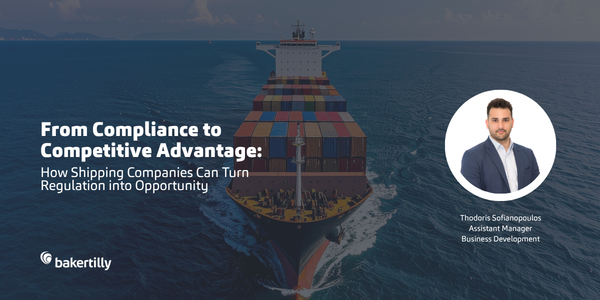
As the global maritime community gathered at Posidonia 2026, discussions extended well beyond vessels and technology. The industry’s agenda is increasingly shaped by sustainability requirements, access to finance, digital transformation, evolving governance expectations and an increasingly complex regulatory environment.
Shipping companies today face simultaneous pressures, such as compliance with environmental regulations, securing funding for fleet renovation, managing geopolitical and supply chain risks, strengthening corporate governance, and meeting growing stakeholder demands for transparency. While these challenges may appear taxing, industry leaders are increasingly viewing them as opportunities to create long-term value.
A notable example is A.P. Moller–Maersk, whose significant investment in methanol-powered vessels was driven partly by anticipated environmental requirements and market expectations. By proactively adapting to regulatory developments, the company not only strengthened its sustainability credentials but also enhanced its attractiveness to customers, investors and financing institutions.
This shift reflects a wider trend across the maritime sector. Financial institutions are placing greater emphasis on ESG performance when evaluating lending decisions, investors are seeking stronger governance frameworks, and shipping groups are increasingly looking at digitalization to improve efficiency and reduce risk. At the same time, market consolidation, strategic partnerships and fleet investments are creating opportunities that require robust financial, tax and transactional expertise.
During our discussions at Posidonia 2026, we confirmed that shipping companies are increasingly looking for ways to turn regulatory and market challenges into opportunities for growth, efficiency and value creation.
At Baker Tilly Greece, we help shipping and transport companies address these challenges through integrated advisory, tax, audit, ESG, risk, transaction and governance services. Whether supporting investment decisions, navigating regulatory changes, strengthening corporate structures or enhancing reporting frameworks, we work alongside clients to transform complexity into opportunity.
In today’s maritime landscape, compliance is no longer simply a requirement, it is a foundation for resilience, growth and competitive advantage.