


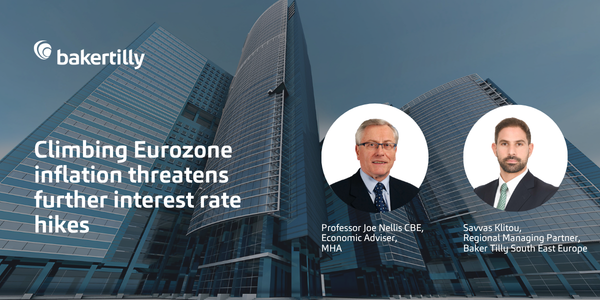
Emeritus Professor Joe Nellis is Head of Economic Research at MHA, the accountancy and advisory firm.
Eurozone inflation has jumped to its highest rate in three years, reaching 3.8% in September and taking it further above the European Central Bank’s official 2% target. Inflation has doubled in just 8 months, from 1.7% in January to 3.8% in September.
The ongoing Middle East crisis remains the primary cause of this latest jump in eurozone inflation. Energy and gas prices have been particularly volatile in recent weeks, pushing up household energy and transport costs and feeding through into firms’ production and distribution costs. We will now be watching out to see if the latest energy shocks spill over into the cost of foodstuffs, manufactured goods, services and wages over the coming months.
This latest spike in inflation should not yet be regarded as a return to the 2022-style inflation spiral when it reached as high as 10.6%. The situation today is different, especially as underlying price pressures remain more contained, and the recent moderation in services sector inflation indicates that domestic inflationary momentum is not accelerating at anything like the pace of the headline measure.
But inflation is expected to rise even further during the final quarter of this year, and could hit 4%. The ECB has already raised interest rates twice so far this year, in June and September, at a time when the European economy has struggled to achieve sustainable, stronger growth. But if further rises in consumer price inflation are accompanied by rising core inflation or wage pressures, then the ECB may be forced to take action and increase interest rates for a third time this year.
The rising cost of energy and tighter monetary policy will, inevitably, put more pressure on household finances and squeeze profit margins for businesses. At the same time, the prospect of tighter monetary policy is worrying for an economy already failing to get out of first gear. The ECB finds itself in a difficult bind, but will be forced to act again if the current direction of travel persists.
Savvas Klitou, Regional Managing Partner, Baker Tilly South East Europe commented:
For Cyprus, the implications are clear: higher interest rates mean increased borrowing costs for households and businesses at a time when rising energy prices are already putting pressure on budgets. While the economy remains relatively resilient, sustained inflation and tighter monetary policy could temper consumer spending and investment in the months ahead.