



The transition to eCarnets will take place in phases:
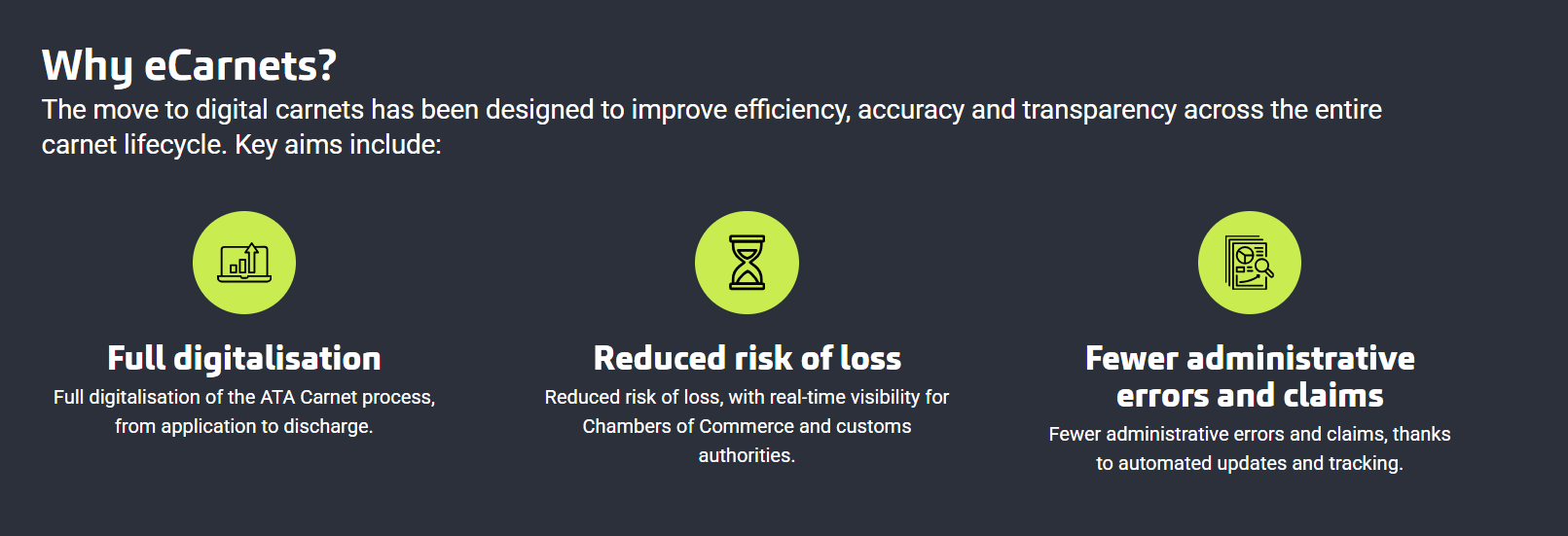
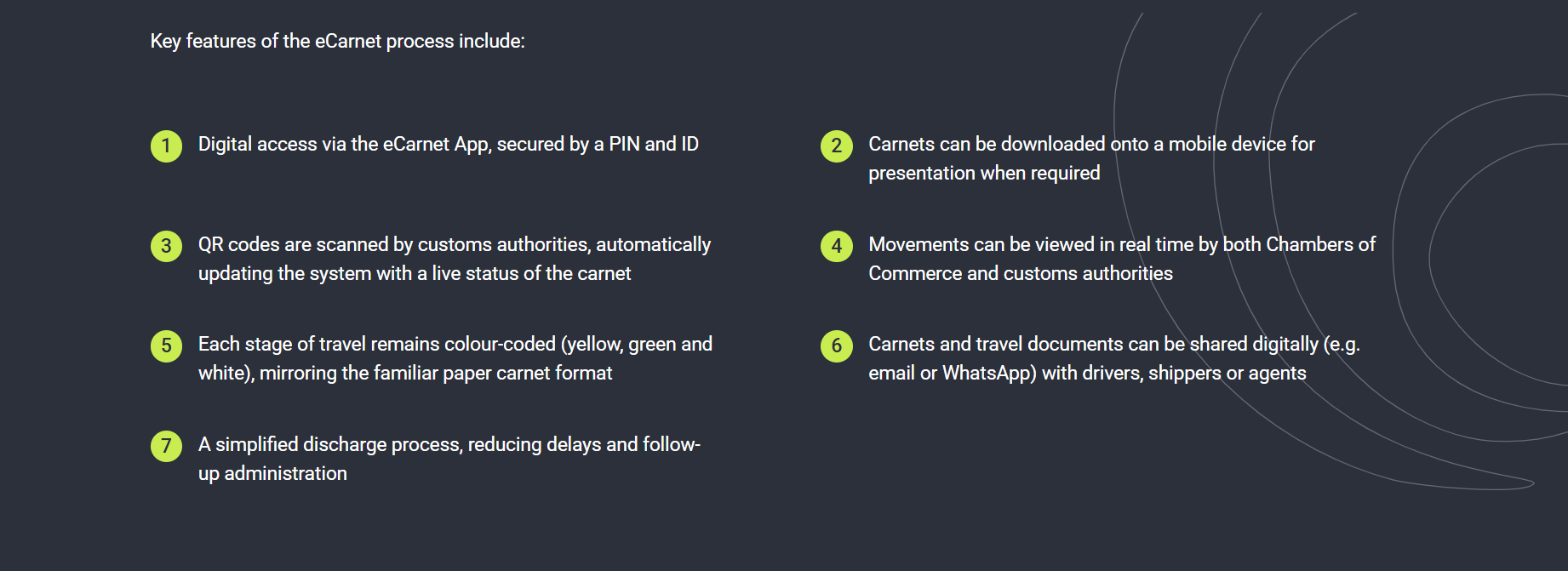
How the new eCarnet process works
The application process for an ATA Carnet remains largely unchanged, with carnets still applied for online through the usual channels. However, how the carnet is accessed and used at borders will be very different.
Multiple-country movements: The parallel procedure
During the transition period, some carnet journeys may include both digitised and non-digitised countries. To accommodate this, a Parallel Procedure will apply until all countries have moved to eCarnets.
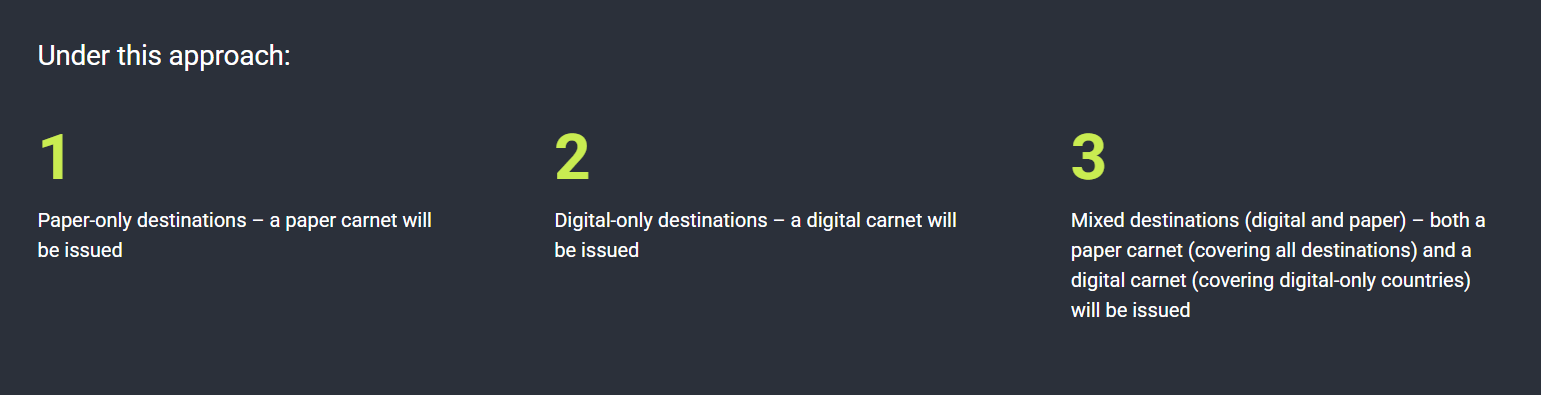
In parallel movements, both the paper and digital carnets must be stamped and scanned by customs authorities. This process is managed by the issuing Chamber of Commerce, so you do not need to take any additional action to ensure the correct documentation is provided.
Ports and practical considerations
A growing number of ports are already enabled to process eCarnets. If you are using a port that is not yet on the approved list, you can submit a pre-arrival or pre-departure notification to the relevant customs authority to help minimise any delays.
Preparing for the change
The shift to eCarnets represents a significant step forward in modernising international trade and temporary exports. While the transition period may involve some complexity, the long-term benefits are clear: faster processing, improved visibility, and reduced administrative risk.
If you would like support or guidance on how eCarnets may affect your movements, our Customs team would be happy to talk you through the process and help you prepare for the changes ahead.