


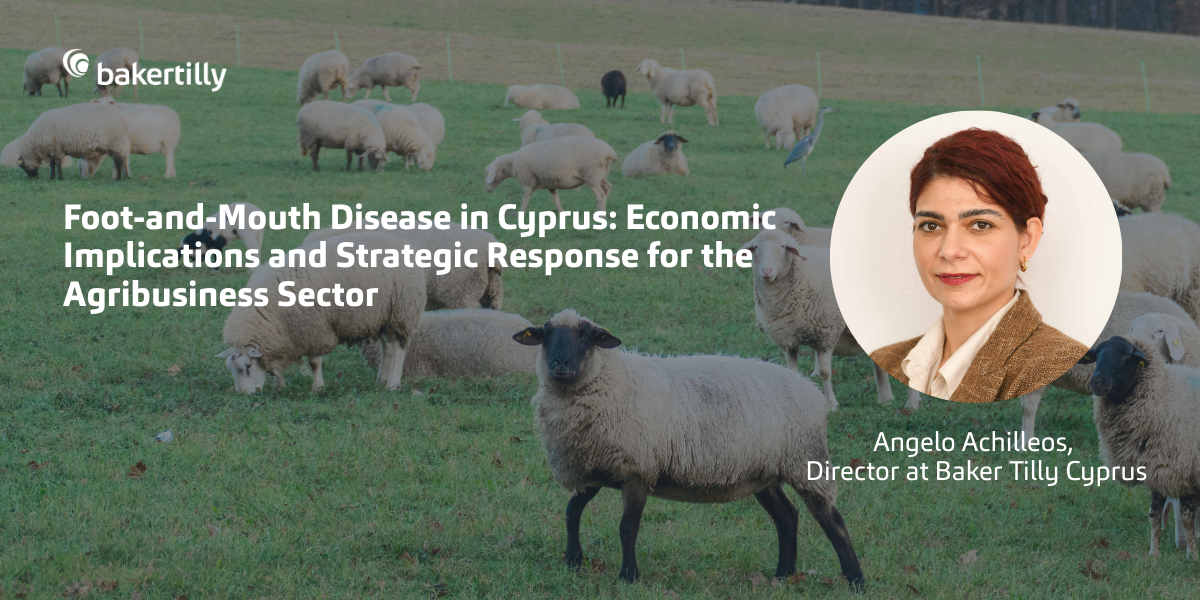
Since mid-February, the outbreak of foot-and-mouth disease has posed a significant economic challenge to Cyprus’s livestock and agricultural sector, as well as to the broader economy. Following the identification of the first cases on the island, the Government activated an Emergency Response Plan and proceeded with the implementation of targeted containment measures. Key measures included quarantines in affected areas, restrictions on the movement of livestock, and the culling of thousands of animals in infected units.
These measures carry immediate economic consequences, particularly for the agricultural and export sectors. They are expected to reduce meat and dairy production, place downward pressure on market prices, and potentially contribute to rising food inflation. Moreover, the presence of the disease may directly impact exports of animal products, thereby affecting producers’ generation of revenues and increasing production costs.
In this context, the development of a sustainable economic model, alongside the adoption of Environmental, Social, and Corporate Governance (ESG) practices, has become critically important for the prevention and effective management of similar crises and in extension, for the safeguarding of the economy. A more effective policy for addressing similar future crises, beyond measures and procedures to contain potential disease outbreaks, is the establishment of a robust framework of economic resilience within the agricultural sector.
Some of the key pillars of an economic strategy to address such crises, inter alia, include:
- Strengthening companies operating in agricultural sector through the adoption of Environmental, Social, and Corporate Governance (ESG) practices, which can enhance biosecurity measures across livestock operations
- Introducing a digital livestock traceability system
- Establishing livestock insurance schemes to provide financial protection for farmers
- Implementing reliable and effective methods for the daily monitoring and regular valuation of livestock assets
- Developing an appropriate ecosystem that ensures business continuity and the smooth operation of agricultural activities
At Baker Tilly Cyprus, we support organisations across the agricultural and food production sectors in strengthening resilience and navigating complex challenges:
- Risk Advisory & Business Continuity Planning
Design and implement tailored BCP frameworks and crisis response strategies.
- ESG Strategy & Implementation
Develop practical ESG frameworks aligned with regulatory expectations and operational realities.
- Financial Advisory & Scenario Modelling
Assess financial exposure, model impact scenarios, and support strategic decision-making.
- Valuation & Asset Management
Provide independent valuation of biological assets and support the implementation of monitoring systems.
- Regulatory & Compliance Advisory
Assist with evolving regulatory requirements, including traceability, reporting, and export compliance.
If you would like to discuss how these developments may impact your organisation, or explore tailored solutions, please contact our Agribusiness Industry Leader, Angelo Achilleos, Director at Baker Tilly Cyprus, at: [email protected]